
My grandpa used to have me play Leisure Suit Larry.
I don't think he knew what it was about. He just saw a computer game and figured it would keep his grandson busy. So there I was, maybe eight or nine years old, trying to answer adult trivia questions to prove I was old enough to play. I'd guess randomly until I got through. Then I'd wander around as this sleazy guy in a white suit, typing commands into a parser, trying to figure out what I was supposed to do next.
"Look moose." "Examine moose." "Talk to moose."
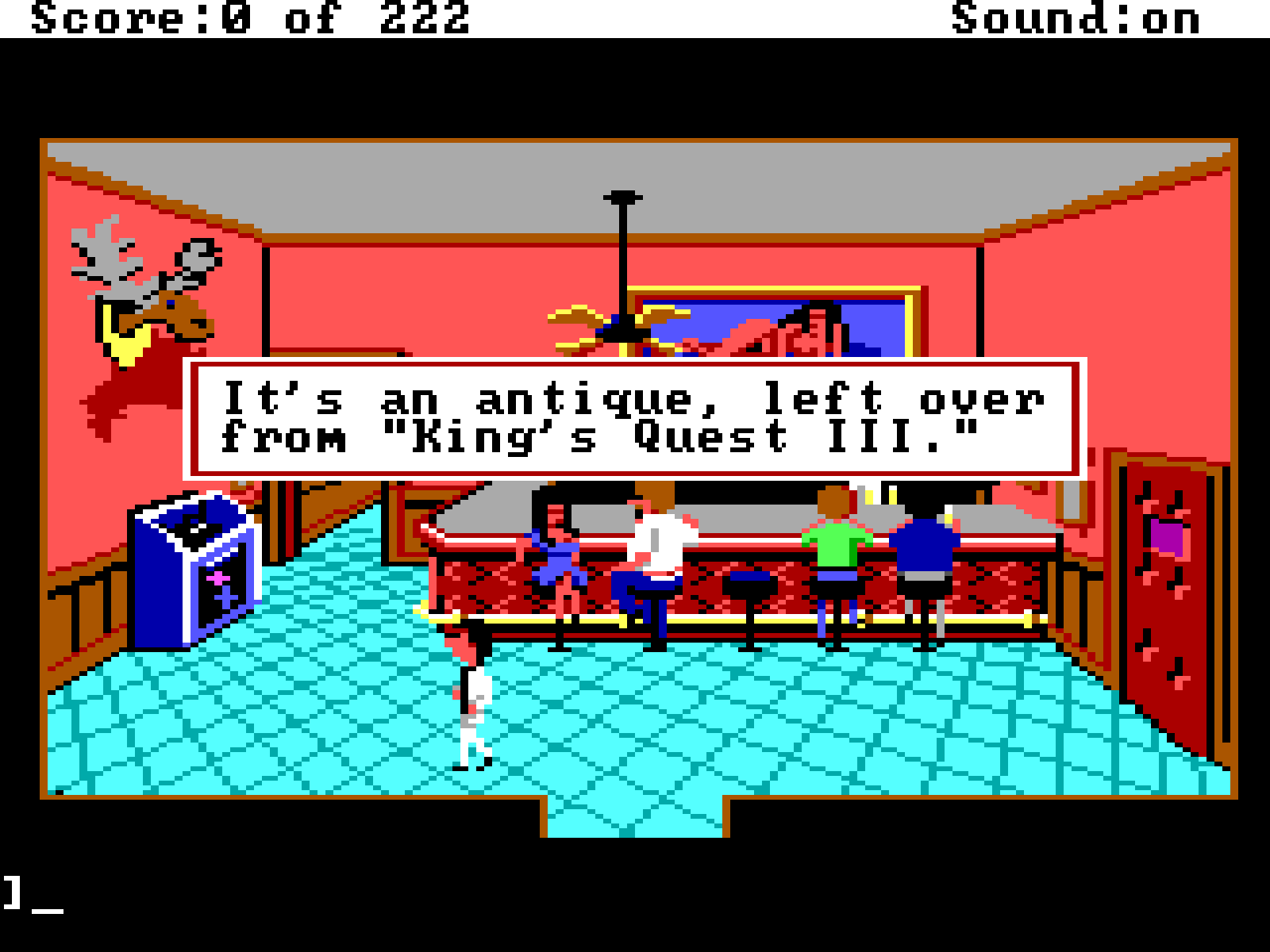
Somewhere in that game, I typed "look moose" at a moose head on the wall.
The game made a joke. Not a Larry joke. A different kind of joke. A reference to something I didn't understand. I kept playing Sierra games after that. Space Quest. King's Quest. Police Quest. And I started noticing things. Characters from one game showing up in another. Little winks. Inside jokes. The Two Guys from Andromeda popping up everywhere.
That's when it hit me: someone made this. Not a company. A person. A person who got bored and hid jokes in the corners. A person who figured nobody would notice but did it anyway.
I've been chasing that feeling ever since.
The whole tradition goes back to 1980. A programmer named Warren Robinett was working on Adventure for the Atari 2600. Atari had a rule: no credits. Programmers shipped games anonymously. The company didn't want competitors poaching their talent.
Robinett didn't like that.
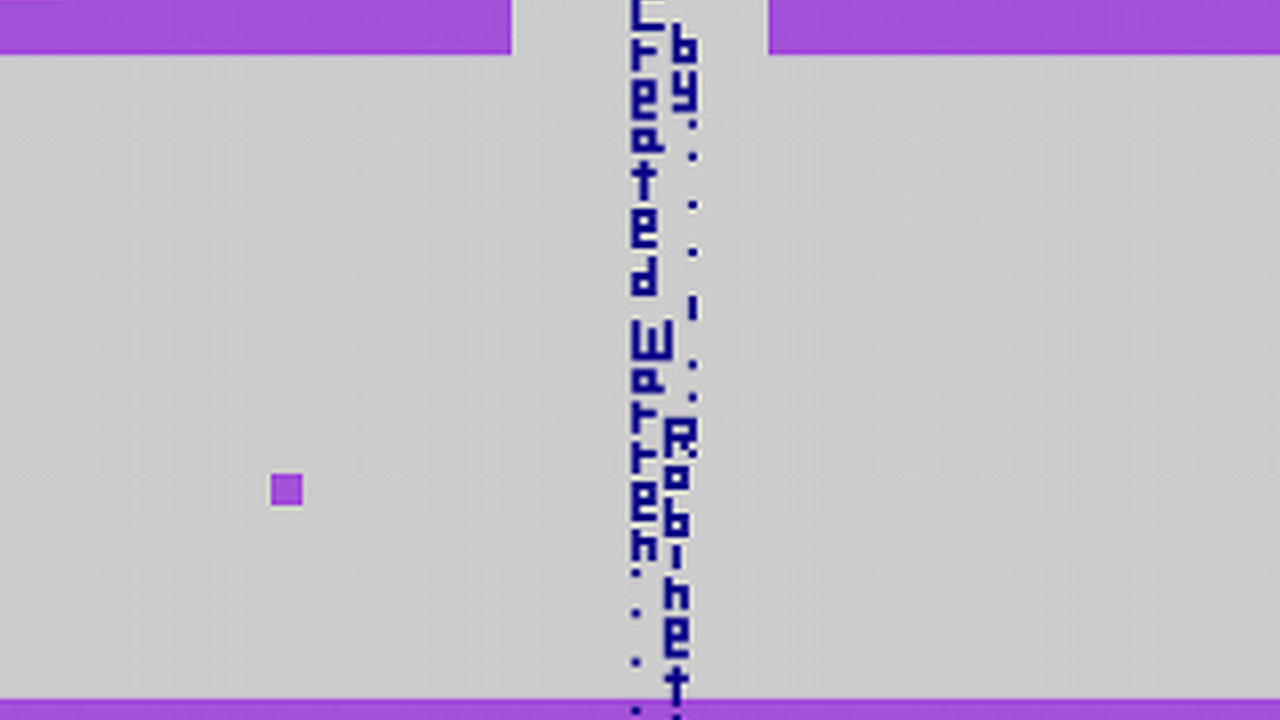
So he hid a secret room. To find it, you had to grab an invisible object — a single pixel, same color as the background — and carry it through a specific wall. Inside the room was a message: "Created by Warren Robinett."
Management never found it. The game shipped. Months later, some kid stumbled across the room and wrote Atari a letter asking what it meant. By then, Robinett had already quit.
When Atari's new game director heard about it, he reportedly said they should hide more of these. He called them "Easter eggs."
The name stuck. Every secret room, every hidden message, every developer signature since then traces back to that moment. One guy, refusing to be invisible.
Once you start looking, they're everywhere.
Doom had IDDQD for god mode. IDKFA for all weapons and keys. These weren't random letter combinations. They were inside jokes. Someone at id Software typed those specific letters because they meant something to them. (I still don't know what IDDQD stands for. Looked it up once. Forgot immediately. Doesn't matter. The point is someone knew.)
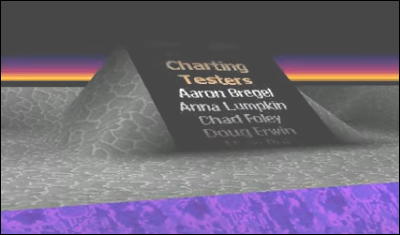
Excel 97 had a flight simulator hidden inside it. Not a reference to one. An actual flight simulator. You had to navigate to row 97, column L, invoke a specific menu, hold down certain keys, and suddenly you were flying over a landscape with developer credits floating in the sky.
The Konami Code — up, up, down, down, left, right, left, right, B, A — started because a developer needed an easy way to test Gradius. He forgot to remove it before shipping. Now it's in hundreds of games and websites. A secret handshake for anyone who knows it.
These aren't bugs. They're humans saying "I was here."
I've thought about this. I don't think there's one answer.
It's fun. When you're grinding through features and bug fixes, hiding something stupid feels like a small rebellion. The spec didn't ask for this. Nobody's paying for it. But it makes you smile.
It's ownership. Especially when you build things for other people. The product ships with their name on it. But that little secret in the corner? That's yours.
It's connection. You're leaving a message for someone you'll never meet. Someone curious enough to look. Someone like you used to be.
I used to find these things. Now I plant them.
When I built this site, I didn't want another portfolio. I wanted something I would have lost my mind over as a kid.
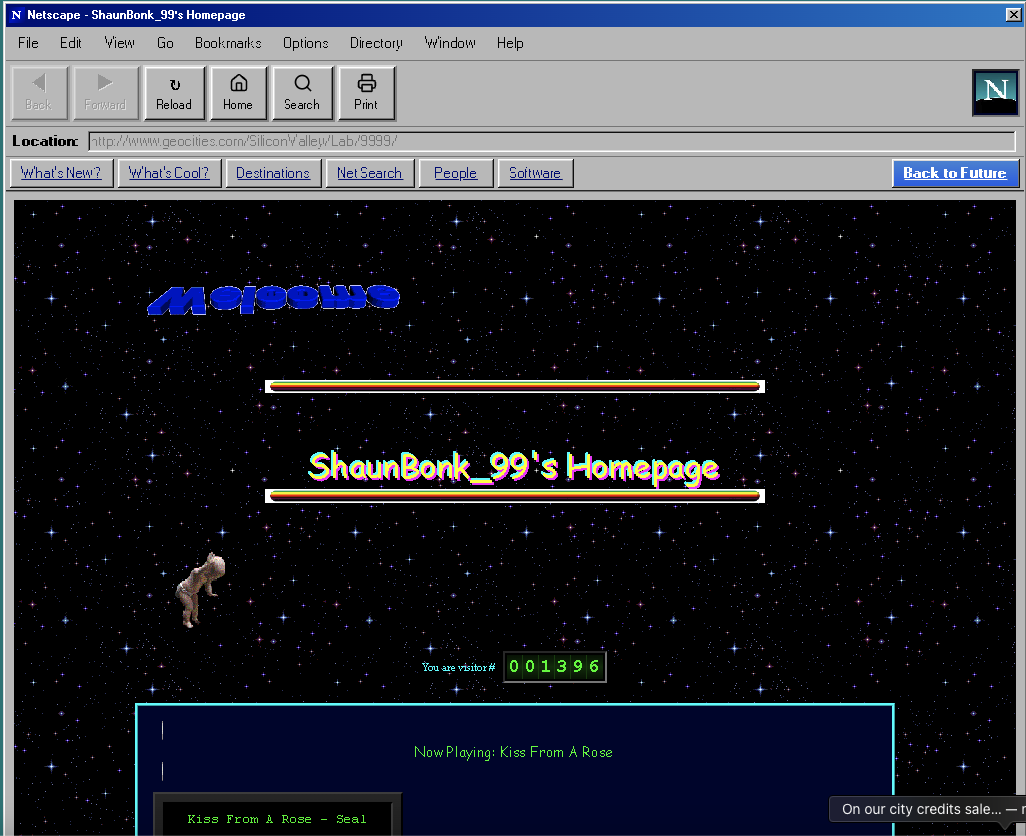
There's a "1999" link in the navigation. Click it and the whole site transforms. Starry backgrounds. Construction GIFs. Rainbow dividers. Geocities fever dream.
There's a terminal. Type commands into it. Some of them do things. One launches a text adventure called SPUDGAME.EXE. It has multiple endings.
There's an achievement system. Certain actions unlock badges. Some are easy. Some aren't. A few are references to the movies that kept me sane as a bullied kid. If you unlock "Hack the Planet," you'll know what I mean.
I didn't build these for engagement metrics. I built them because finding those Sierra easter eggs as a kid made me feel like I was in on something. Like the developers left a gift for anyone who bothered to look.
I wanted to leave that gift for someone else.
Every codebase has ghosts. Comments from developers who left years ago. Variable names that tell stories. Signatures hidden where no one looks.
Software feels impersonal. You use an app, browse a website, and forget that humans made it. Real people with inside jokes and bad days and things they wanted to say.
The easter eggs are how they say it.
I don't know if anyone will find everything I've hidden here. Maybe they will. Maybe they won't. But somewhere, right now, there's a kid clicking on things just to see what happens. Examining the moose head. Looking for the secret room.
Every codebase has ghosts. If you look carefully, some of them wave back.


